
What’s Changing in the Hostel Industry and What We’re Watching at NAHA 2026
Every year, the NAHA Conference brings together a specific kind of operator—the ones who are still asking questions.
Not surface-level questions like “how do I get more bookings?” but the harder ones:What’s actually changing in the hostel industry in North America? Where are regulations tightening—and why?What’s working operationally, beyond theory?
As we head into the 2026 conference in Montreal, this isn’t about inspiration. It’s about clarity.
This post outlines what we’re hoping to learn—not as spectators, but as operators trying to stay grounded in a shifting landscape.
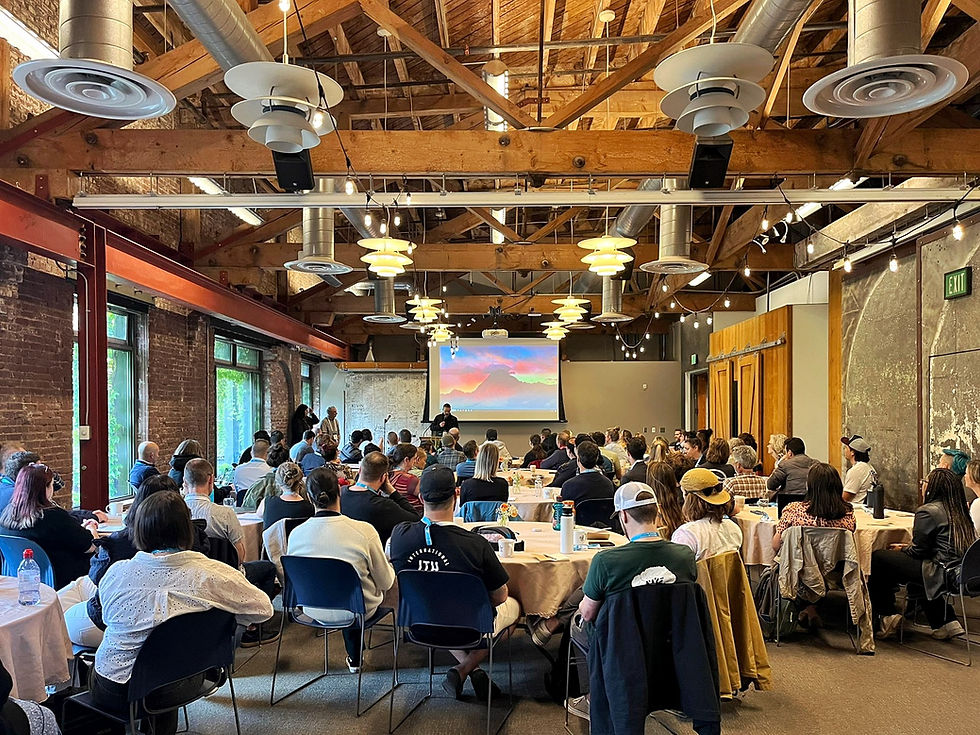
Understanding Where Regulations Are Quietly Shifting
If there’s one area that continues to define the future of hostels in North America, it’s regulation.
Not the obvious, headline-making policies—but the smaller, local decisions that slowly reshape what’s possible.
Across cities, we’re seeing increased overlap between hostel classifications and short-term rental frameworks. In some cases, hostels are being grouped into regulatory categories that don’t quite fit their operational model. In others, zoning restrictions are tightening in ways that limit expansion—or even continuity.
What we want from Montreal is not a broad overview, but real operator insight:How are hostels adapting in cities with stricter zoning?
Where are operators finding alignment with local governments?
What early signals should we be paying attention to?
Because “hostel regulations” aren’t static—and waiting until they are enforced is usually too late.
The Reality of Running a Hostel in 2026
There’s a gap in the industry between what gets talked about publicly and what operators actually deal with day-to-day.
Running a hostel today involves more complexity than it did even five years ago. Labor challenges, rising operational costs, guest expectation shifts, and platform dependencies all intersect in ways that aren’t always visible from the outside.
At this year’s conference, we’re less interested in polished success stories and more focused on operational transparency:What systems are breaking under pressure?Where are operators simplifying—and why?What decisions are being made now that wouldn’t have made sense before?
These conversations matter because they reflect the real state of hostel operations—not an idealized version of it.
What “Community” Actually Means for Hostel Operators Now
“Community” is a word that gets used often in this space—but rarely defined in operational terms.
At a surface level, it refers to guest interaction and shared experiences. But for operators, community increasingly extends beyond the building itself: Local partnerships, Neighborhood integration, Regulatory relationships, Staff culture, and retention.
The question isn’t whether community matters—it’s how it’s being built intentionally in a way that supports sustainability.
At NAHA 2026, we’re looking to understand how operators are evolving their approach: Where is community driving real value?
Where is it becoming harder to maintain? And how does it translate into long-term resilience?
Learning from Operators Like Treasure State Hostel
One of the most valuable parts of any NAHA Conference isn’t the programming—it’s the operators themselves.
Hostels like Treasure State Hostel represent something important in the North American landscape: independently run, experience-driven, and deeply rooted in their local context.
What makes these operators worth paying attention to isn’t scale—it’s decision-making.
How do they approach growth without losing identity?
How do they navigate regulations in smaller markets? What trade-offs are they willing—or unwilling—to make?
These are the kinds of grounded, experience-based insights that don’t show up in reports—but shape how others operate.
The Role of a Hostel Association in a Changing Industry
The idea of a “hostel association” is also evolving.
It’s no longer just about networking or shared visibility. Increasingly, associations like NAHA sit at the intersection of advocacy, education, and industry positioning.
As external pressures grow—especially around regulation and classification—the role of a unified voice becomes more critical.
At this conference, part of the learning is internal: What does effective representation actually look like? How can operators contribute to shaping policy conversations? What kind of information-sharing is most valuable moving forward?
Because if the hostel industry in North America is going to remain distinct, it will require more than individual adaptation—it will require coordination.
Why This Conference Still Matters
There’s no shortage of hospitality conferences. But very few are built around the realities of running a hostel.
That’s why NAHA continues to hold relevance.
Not because it offers answers—but because it creates space for better questions.
And in an environment where the landscape is shifting—regulations, operations, expectations—that’s what operators need most.
Clarity doesn’t come from trends. It comes from conversations with people who are actually doing the work.
Looking Ahead

We’re not going to Montreal to confirm what we already know.
We’re going to test assumptions, compare realities, and leave with a clearer understanding of where this industry is heading—and what it requires from us as operators.
If NAHA’s blog is meant to be “the place hostel operators go when they want to understand what’s really happening,” then this is where that starts:
Not with conclusions—but with the right questions.


Comments